


Gungjung Tteokbokki (Royal Tteokbokki)
Before fiery gochujang-drenched rice cakes became Korea’s beloved street food, there was a refined, savory dish gracing the tables of Joseon Dynasty royalty. Gungjung Tteokbokki (궁중떡볶이) represents the original form of tteokbokki, a sophisticated stir-fried rice cake preparation that showcases the elegance of Korean palace cuisine. Unlike its modern spicy counterpart, this royal court version features tender rice cakes combined with marinated beef, assorted mushrooms, and colorful vegetables, all gently cooked in a fragrant soy sauce and sesame oil-based sauce.
This dish exemplifies the core philosophy of Korean royal court cuisine: achieving harmony through carefully balanced flavors and textures while highlighting the natural taste of each premium ingredient. Whether you’re sensitive to spicy foods, cooking for young children, or simply seeking to explore the historical depth of Korean culinary traditions, Gungjung Tteokbokki offers an accessible gateway into authentic Korean cooking.
 5
5 30m
30m medium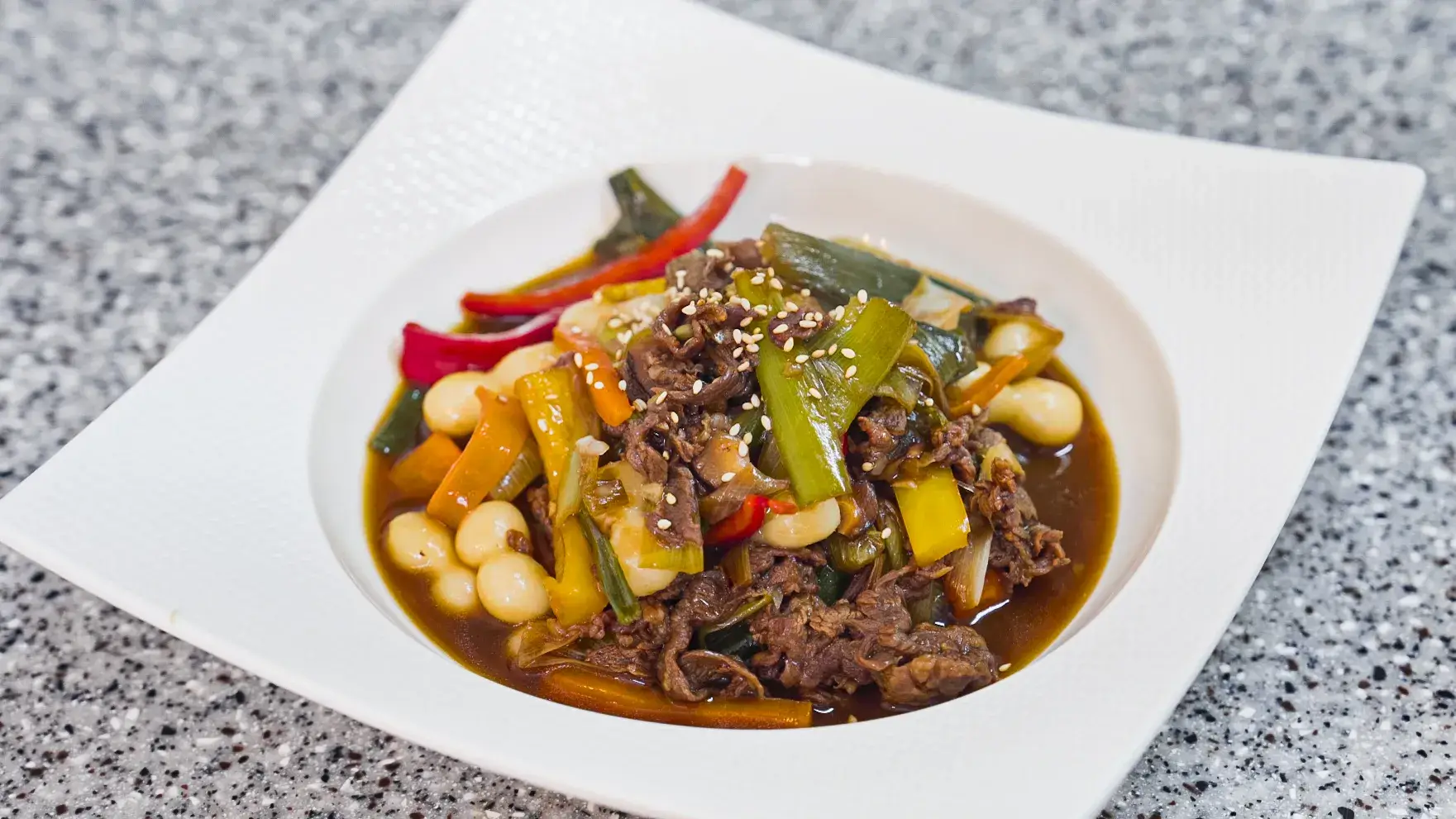
Cooking Order
Ingredients
Basic ingredients
Rice Tteok297.67 g(300g)
Bulgogi Beef (thinly sliced)198.45 g(200g)
Shiitake Mushrooms2 pcs
Carrot¼ pc
Green Onions2 stalks
Minari (optional)a handful
Paprika (optional)1/4 pc
Sesame Oil
Sesame Seeds
Tteok Sauce
Soy Sauce1 TBSP
Sweetener (Koreans use oligosaccharide)1 TBSP
Sesame Oil1 TBSP
Beef Marinade
Soy Sauce3 TBSP
Oyster Sauce1 TBSP
Sugar1 TBSP
Minced Garlic1 TSP
Sesame Oil1 TBSP
Pear Juice1 Bottle
Crushed Pepper
Step 1:
[{"title":"","description":"Place the tteok into water for 10 minutes or slightly blanch it to soften the tteok. If using garage tteok (long cylindrical tteok) make sure to cut it in half to ensure that the sauce can seep into the tteok.","images":[{"url":"https://api.tastekoreanfood.com/wp-content/uploads/2025/05/IMG_0084.webp","alt":"Glass bowl containing softened white rice cake pieces soaking in water, the essential first step for preparing chewy gungjung tteokbokki."}],"video":null},{"title":"","description":"Pour the Tteok Sauce onto the tteok and mix thoroughly.","images":[{"url":"https://api.tastekoreanfood.com/wp-content/uploads/2025/05/IMG_0082_converted.webp","alt":"Golden ginkgo nuts in glass bowl for gungjung tteokbokki Korean royal court rice cakes traditional garnish ingredient preparation."}],"video":null},{"title":"","description":"Get rid of the shiitake mushroom stems, and cut the head into thin slices. Cut the meat into bite-sized pieces.","images":[{"url":"https://api.tastekoreanfood.com/wp-content/uploads/2025/05/IMG_0083.webp","alt":"Fresh shiitake mushrooms being sliced on wooden cutting board for gungjung tteokbokki Korean royal court rice cakes recipe ingredient preparation."}],"video":null},{"title":"","description":"Mix the beef, mushroom slices and the beef marinade together, and let it marinate for 20 minutes.","images":[{"url":"https://api.tastekoreanfood.com/wp-content/uploads/2025/05/IMG_0081.webp","alt":"Soy sauce-based marinade with sesame seeds in glass bowl for gungjung tteokbokki Korean royal court rice cakes beef seasoning preparation."}],"video":null},{"title":"","description":"Cut the carrot diagonally into thin slices.","images":[{"url":"https://api.tastekoreanfood.com/wp-content/uploads/2025/05/화면-캡처-2025-05-19-125549.webp","alt":"Fresh orange carrot strips julienned on wooden cutting board for gungjung tteokbokki Korean royal court rice cakes colorful vegetable ingredients."}],"video":null},{"title":"","description":"Cut the paprika into thin strips.","images":[{"url":"https://api.tastekoreanfood.com/wp-content/uploads/2025/05/화면-캡처-2025-05-19-125622.webp","alt":"Fresh yellow bell pepper strips sliced on wooden cutting board for gungjung tteokbokki Korean royal court rice cakes colorful vegetable ingredients."}],"video":null},{"title":"","description":"Cut the green onion into quarters lengthwise, and then cut it into 3cm lengths.","images":[{"url":"https://api.tastekoreanfood.com/wp-content/uploads/2025/05/화면-캡처-2025-05-19-125735.webp","alt":"Fresh green onions julienned on wooden cutting board for gungjung tteokbokki Korean royal court rice cakes recipe ingredient preparation."}],"video":null},{"title":"","description":"In a heated pan, pour cooking oil and begin cooking the green onions until slightly brown","images":[{"url":"https://api.tastekoreanfood.com/wp-content/uploads/2025/05/화면-캡처-2025-05-19-125807.webp","alt":"Fresh green leeks and scallions stir-frying in black wok for gungjung tteokbokki Korean royal court rice cakes recipe preparation."}],"video":null},{"title":"","description":"Pour some oil into the pan, add the beef marinade and begin cooking.","images":[{"url":"https://api.tastekoreanfood.com/wp-content/uploads/2025/05/화면-캡처-2025-05-19-125902.webp","alt":"Marinated beef strips being added to sautéed green onions in wok for gungjung tteokbokki Korean royal court rice cakes stir-fry preparation."}],"video":null},{"title":"","description":"Once the beef is almost fully cooked, put in 1 Tbsp of minced garlic. Put the carrot slices, tteok and paprika into the wok and cook until slightly soft. rn","images":[{"url":"https://api.tastekoreanfood.com/wp-content/uploads/2025/05/화면-캡처-2025-05-19-140540.webp","alt":"Gungjung tteokbokki Korean royal court rice cakes stir-frying in wok with marinated beef colorful bell peppers onions and savory soy sauce glaze during cooking preparation."}],"video":null},{"title":"","description":"Put in the pear juice.","images":[{"url":"https://api.tastekoreanfood.com/wp-content/uploads/2025/05/화면-캡처-2025-05-19-141749-1.webp","alt":"Pouring pear juice into a cast iron skillet filled with colorful vegetables and tteokbokki ingredients""}],"video":null},{"title":"","description":"Add in soy sauce, oyster sauce, sugar and tuna fish sauce to taste. (In the video, we added 1 spoonful of soy sauce, oyster sauce, sugar and tuna fish sauce.) If salty, add more pear juice. ","images":[{"url":"https://api.tastekoreanfood.com/wp-content/uploads/2025/05/화면-캡처-2025-05-19-140629-2.webp","alt":"Adding soy sauce, oyster sauce, sugar, and tuna fish sauce to tteokbokki stir-fry with peppers and vegetables in a wok"}],"video":null},{"title":"","description":"Pour water to the mix.","images":[{"url":"https://api.tastekoreanfood.com/wp-content/uploads/2025/05/화면-캡처-2025-05-19-130005-1.webp","alt":"Pouring water into a skillet of sautéed vegetables and seasonings for court-style tteokbokki"}],"video":null},{"title":"","description":"As the mixture begins to boil, reduce the heat. Place on medium heat for 3 minutes and adjust heat to low. Pour 1 Tbsp of sesame oil. rn","images":[{"url":"https://api.tastekoreanfood.com/wp-content/uploads/2025/05/화면-캡처-2025-05-19-141522-1.webp","alt":"Drizzling sesame oil over simmering tteokbokki mixture with vegetables in a cast iron pan"}],"video":null},{"title":"","description":"Place the court-style tteokbokki into the bowl and garnish with sesame seeds.","images":[{"url":"https://api.tastekoreanfood.com/wp-content/uploads/2025/05/화면-캡처-2025-05-19-140045-2.webp","alt":"Finished court-style tteokbokki served in a white bowl, garnished with sesame seeds and red chili peppers"}],"video":null}]
Editor's Detail
Table of Contents
- The Historical Roots of Gungjung Tteokbokki
- Understanding the Key Ingredients
- Garae-tteok: The Rice Cake Foundation
- The Royal Sauce: Soy Sauce and Sesame Oil
- Premium Proteins and Vegetables
- Cooking Techniques from the Royal Kitchen
- Frequently Asked Questions
- Serving Your Royal Court Creation
The Historical Roots of Gungjung Tteokbokki

The word “gungjung” (궁중) translates directly to “royal court” or “palace,” immediately signaling this dish’s prestigious origins. During the Joseon Dynasty (1392-1910), Korean royal cuisine was designated as Important Intangible Cultural Property No. 38, reflecting its significance to Korean cultural heritage. The royal palace employed specialized court ladies called sanggung who trained for decades in the art of preparing meals for the king, following strict protocols that emphasized both nutrition and aesthetic presentation.

Historical records, including texts like Siuijeonseo (是議全書), document early versions of tteokbokki prepared with white korean rice cakes, sirloin beef, sesame oil, soy sauce, scallions, and toasted sesame seeds. This preparation method predates the introduction of chili peppers to Korea, which arrived via Portuguese traders through Japan in the late 16th century. The traditional banchan culture that defines Korean dining also originated from these royal court traditions, where meals were composed of 12 carefully balanced side dishes served alongside rice and soup.

One fascinating theory suggests that Gungjung Tteokbokki was inspired by japchae, another royal court dish featuring stir-fried glass noodles with vegetables. Some historical accounts claim this rice cake dish was created specifically to help restore the king’s appetite, earning it the alternate name tteokjapchae (떡잡채). The transformation from elite court cuisine to modern street food occurred dramatically in the 1950s, when Ma Bok-rim accidentally dropped rice cakes into jajangmyeon sauce and subsequently developed the gochujang-based version we recognize today.
Understanding the Key Ingredients
What distinguishes Gungjung Tteokbokki from spicy tteokbokki lies entirely in its ingredient selection and seasoning approach. Rather than relying on the bold heat of gochugaru or gochujang, this royal version builds its flavor foundation through quality soy sauce, aromatic sesame oil, and the natural umami of fresh vegetables and premium beef.
Garae-tteok: The Rice Cake Foundation

Korean Name: 가래떡 (garae-tteok)
Pronunciation: gah-RAE-tteok
The cylindrical rice cakes used in this dish are called ssal-tteok, made from non-glutinous rice flour. These rice cakes possess a dense, satisfyingly chewy texture that absorbs the savory sauce while maintaining structural integrity throughout cooking.
Sourcing quality garae-tteok: Fresh rice cakes from Korean markets offer the best texture, typically found in refrigerated sections. Frozen versions are widely available at Asian grocery stores and work excellently when properly prepared. Look for rice cakes without added wheat starch if you’re concerned about gluten content, and check that they appear uniformly white without any gray discoloration.
Preparation tip: Soak dried or frozen rice cakes in warm water for 10-15 minutes before cooking, or briefly blanch them in boiling water for 30 seconds. This crucial step ensures they cook evenly and achieve that signature chewy-yet-tender texture that defines quality tteokbokki.
The Royal Sauce: Soy Sauce and Sesame Oil

Korean Name: 간장 (ganjang) + 참기름 (chamgireum)
The sauce for Gungjung Tteokbokki reflects the refined taste preferences of the Joseon court. Traditional Korean soy sauce (joseon ganjang or soup soy sauce) provides a lighter, less overwhelming saltiness compared to regular soy sauce, while toasted sesame oil contributes nutty depth and aromatic richness.

A balanced sauce typically combines:
- Soy sauce for savory umami depth
- Sesame oil for nutty fragrance and silky mouthfeel
- Mirin or rice wine for subtle sweetness
- Sugar or honey for gentle caramelization
- Garlic for aromatic foundation
This combination creates what Koreans describe as a “clean” (kkaeuteun-mat) flavor profile, allowing each ingredient’s natural taste to shine through rather than being masked by intense heat or overwhelming seasoning.
Premium Proteins and Vegetables

Traditional Gungjung Tteokbokki features thin slices of high-quality beef, typically rib-eye or sirloin, marinated briefly in a mixture of soy sauce, sesame oil, garlic, and black pepper. This preparation mirrors bulgogi-style seasoning but with a lighter touch appropriate for stir-frying.
The vegetable components typically include:
Shiitake mushrooms (pyogo beoseot): These provide meaty texture and deep umami that the Joseon court prized highly. Similar to their role in gujeolpan, shiitake mushrooms contribute earthy depth that complements the savory sauce.

Carrots (danggeun): Julienned carrots add natural sweetness and vibrant orange color, contributing to the dish’s visual appeal while providing pleasant crunch.
Bell peppers or paprika: Both red and green varieties create color contrast and mild sweetness that rounds out the flavor profile.

Onions and scallions: Yellow onions provide a savory base during cooking, while green scallions added at the end offer fresh color and mild onion flavor.
Cooking Techniques from the Royal Kitchen
The cooking methodology for Gungjung Tteokbokki reflects broader principles of Korean royal court cuisine, emphasizing careful preparation and gentle heat management rather than aggressive high-heat cooking.
The Importance of Pre-Seasoning
Unlike Western stir-frying where seasoning often occurs during cooking, traditional Korean preparation involves pre-seasoning components separately. The rice cakes receive a light coating of soy sauce and sesame oil before cooking, ensuring flavor penetrates the dense texture rather than merely coating the surface. Similarly, the beef marinates briefly (15-20 minutes) to develop flavor depth.

This technique, sometimes called jomul jomul (주물주물), involves gently massaging seasonings into ingredients with your hands, allowing flavors to absorb more effectively than simply mixing with utensils.
Temperature Management
Royal court cooking emphasizes moderate heat and patient cooking rather than the aggressive wok hei approach common in Chinese stir-frying. For Gungjung Tteokbokki, maintain medium to medium-high heat, allowing ingredients to cook through gently without scorching. This approach prevents the sauce from burning and keeps the rice cakes supple rather than tough.
The ideal cooking sequence involves:
- Stir-frying the marinated beef until partially cooked
- Adding harder vegetables (carrots, onions) to soften
- Incorporating mushrooms and softer vegetables
- Adding pre-seasoned rice cakes with a splash of water
- Tossing everything together as the sauce thickens
Cook for approximately 8-10 minutes total, allowing the sauce to glaze the ingredients while maintaining distinct textures.
Visual Cues for Perfect Doneness
Rice cakes: They should appear glossy and translucent at the edges while maintaining their shape without becoming mushy Beef: Fully cooked with no pink remaining, slightly caramelized at the edges Vegetables: Tender-crisp with vibrant colors retained Sauce: Reduced to a glossy coating that clings to ingredients without pooling
Frequently Asked Questions
What makes this recipe authentically Korean?
Authenticity in Gungjung Tteokbokki comes from three key elements. First, the sauce must be soy sauce-based rather than gochujang-based like street-style tteokbokki. Second, the dish should include quality beef and multiple vegetable varieties, reflecting the abundance of royal cuisine. Third, the cooking technique emphasizes gentle stir-frying rather than boiling in sauce. The absence of intense spice is not a “mild version” of modern tteokbokki but rather represents the original historical preparation that predates chili pepper use in Korean cooking.

Western adaptations to avoid include using regular chili flakes for color, substituting the rice cakes with pasta, or adding cheese, as these fundamentally alter the dish’s intended flavor profile.
What if I can’t find specific Korean ingredients?
For garae-tteok (rice cakes): While there’s no perfect substitute, you can use Korean rice cake soup slices (tteokguk-tteok) cut into smaller pieces. In absolute emergencies, some cooks use fresh gnocchi, though this significantly changes the texture. Online retailers like H-Mart, Weee!, and Amazon stock frozen Korean rice cakes with nationwide shipping.
For Korean soy sauce: Regular Japanese soy sauce (Kikkoman) works adequately, though it’s saltier than Korean guk-ganjang. Reduce the quantity by about 20% and add a small pinch of sugar to compensate. Low-sodium soy sauce is another option.
For sesame oil: This ingredient is essential and has no suitable substitute. The nutty, toasted flavor defines the dish’s character. Look for Korean brands like Ottogi or CJ at any Asian grocery store.
How do I know when this dish is properly cooked?
Visual and textural cues indicate perfect doneness. The rice cakes should be glossy and slightly translucent, yielding easily when pierced with a chopstick but still maintaining pleasant chewiness. The sauce should have reduced to a glossy coating that clings to ingredients rather than pooling at the bottom of the pan. The beef should show no pink color, and vegetables should retain some bite while being cooked through.
Signs of overcooking include mushy rice cakes that have lost their structural integrity, vegetables that have become limp and dull in color, or sauce that has reduced too much and begun to scorch.
What should I serve with this dish?
Gungjung Tteokbokki functions beautifully as both a main dish and a substantial side dish within a traditional Korean meal structure. For an authentic presentation, serve alongside steamed white rice, a light soup like miyeok-guk (seaweed soup), and various banchan including kimchi, seasoned vegetable namul, and pickled radish.

Traditional beverage pairings include Korean rice wine (makgeolli) or roasted barley tea (boricha). For special occasions, this dish pairs well with other royal court preparations like gujeolpan, creating an elegant spread that honors Korean culinary heritage.

Serving Your Royal Court Creation
Presentation matters in Korean royal cuisine, where dishes were arranged to please both the palate and the eye. Transfer your finished Gungjung Tteokbokki to a shallow serving bowl or traditional Korean brassware if available. Garnish with toasted sesame seeds, thinly sliced scallion greens, and optionally a few pine nuts, which were prized in Joseon court cooking.

Storage and Reheating
Leftovers store well in the refrigerator for 2-3 days. When reheating, add a splash of water to the pan and cover briefly to create steam, which helps restore the rice cakes’ chewy texture. Avoid microwave reheating if possible, as it tends to make the rice cakes rubbery.
Batch Cooking Considerations
The sauce and marinated beef can be prepared up to one day in advance, but the rice cakes and vegetables should be cooked fresh for best results. If preparing for a larger gathering, blanch the rice cakes and prep all vegetables ahead of time, then complete the final stir-frying just before serving.

Experience the Elegance of Korean Royal Cuisine
Gungjung Tteokbokki offers more than just a delicious meal. It provides a direct connection to centuries of Korean culinary tradition, representing the sophisticated tastes of Joseon Dynasty royalty. By mastering this refined dish, you develop skills that transfer to many aspects of Korean cooking: the art of balancing flavors, the importance of pre-seasoning, and the technique of gentle stir-frying that preserves ingredient integrity.
Ready to expand your Korean cooking repertoire? Explore our collection of authentic Korean recipes or dive deeper into Korean ingredients to build your pantry for traditional cooking. For a deeper understanding of how Korean side dishes complete a meal, our comprehensive banchan guide provides essential knowledge for creating balanced Korean dining experiences.

Share your Gungjung Tteokbokki creations with us and join our community of Korean food enthusiasts discovering the rich heritage of this remarkable cuisine.
How would you rate this recipe?
Reviews (0)
Join the Taste Korean food community and add comments.

Seafood Scallion Pancake (Haemul Pajeon)
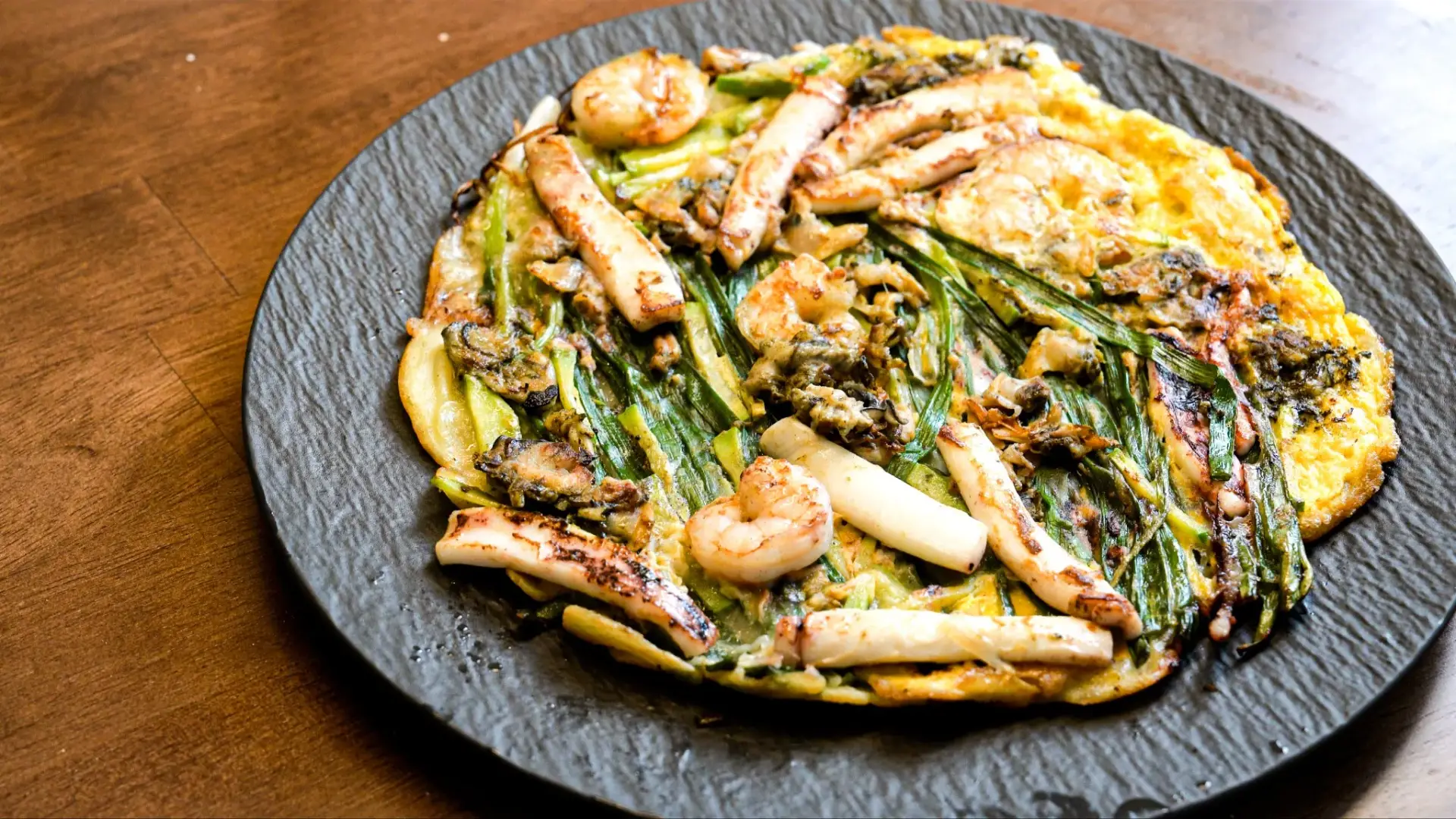
There’s a reason Koreans instinctively reach for their phones to order pajeon the moment raindrops hit the window. The sizzle of batter meeting hot oil sounds remarkably like rainfall, triggering what food scientists call a Pavlovian response built over generations of rainy-day cooking. Haemul Pajeon (해물파전) represents the pinnacle of this tradition—a golden, crispy seafood scallion pancake that transforms simple ingredients into extraordinary comfort food.
This isn’t just another savory pancake. The name itself tells the story: "haemul" (해물) means seafood, "pa" (파) refers to scallions, and "jeon" (전) describes pan-fried battered dishes. Together, they create a dish where the batter serves merely as a delicate binder, allowing generous portions of sweet scallions and briny seafood to take center stage. The most prestigious version, Dongnae Pajeon from Busan, was once considered worthy of royal courts during the Joseon Dynasty.
Whether you’re a seasoned Korean home cook or just beginning your journey into authentic Korean cuisine, mastering this dish opens the door to understanding Korean culinary philosophy: the balance of textures, the layering of umami, and the deep connection between food and emotional comfort.
535 minmedium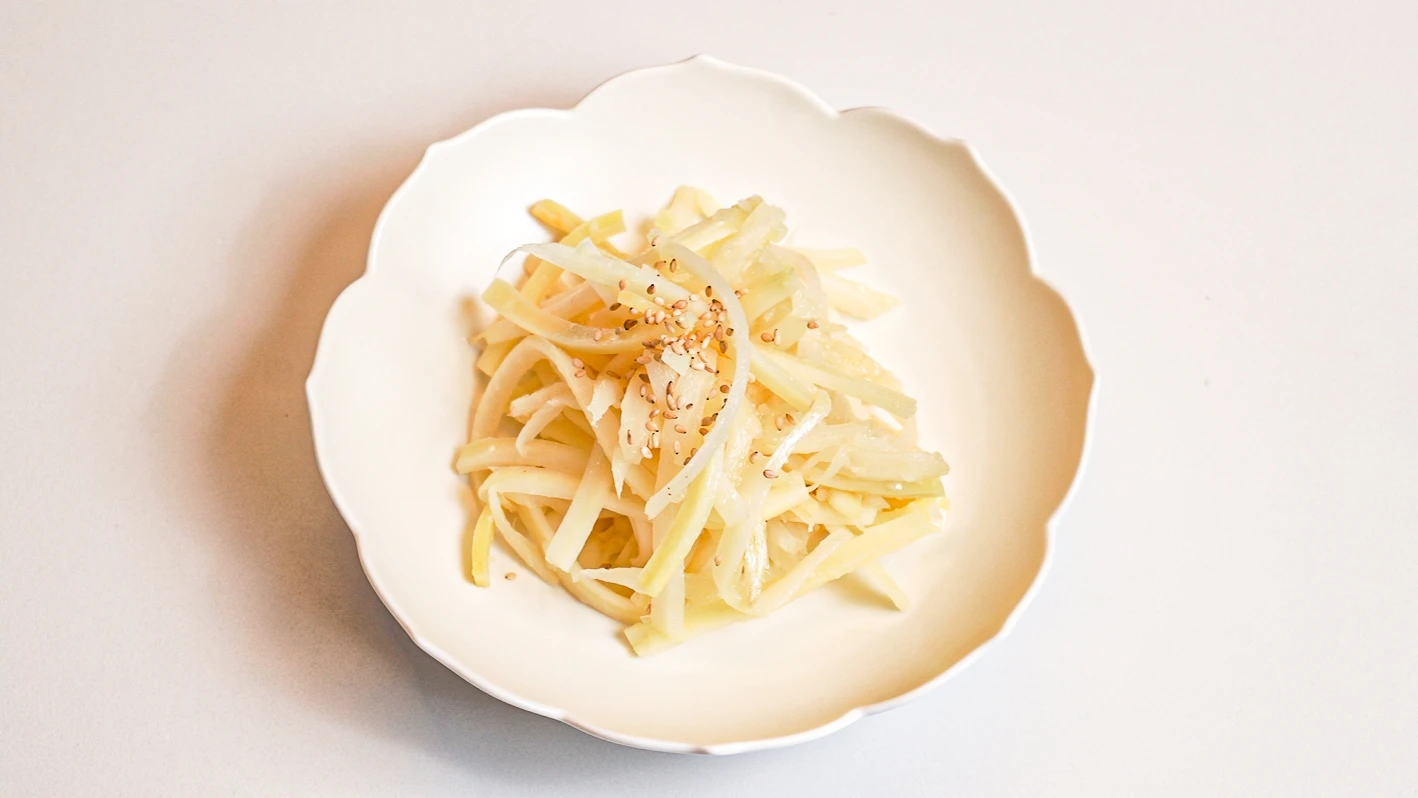
Doraji Namul
There are Korean side dishes that show up quietly on the table, never calling attention to themselves — and then, after one bite, you find yourself reaching for them again and again. Doraji namul (도라지나물) is exactly that dish. Made from the root of the bellflower plant, this lightly seasoned banchan delivers a satisfying crunch, a gentle bitterness that fades into earthy sweetness, and a delicate chewiness that pairs beautifully with virtually anything. It is one of the original vegetables of Korean cuisine — eaten for centuries, prescribed by traditional medicine practitioners, woven into folk songs and spring rituals. If you’ve been curious about how to make doraji namul at home, this guide gives you everything you need: the soaking technique that makes or breaks the dish, the difference between the white and red spicy variations, sourcing advice for fresh or dried root, and the small details that separate a truly authentic result from a flat, bitter disappointment.
30 mineasy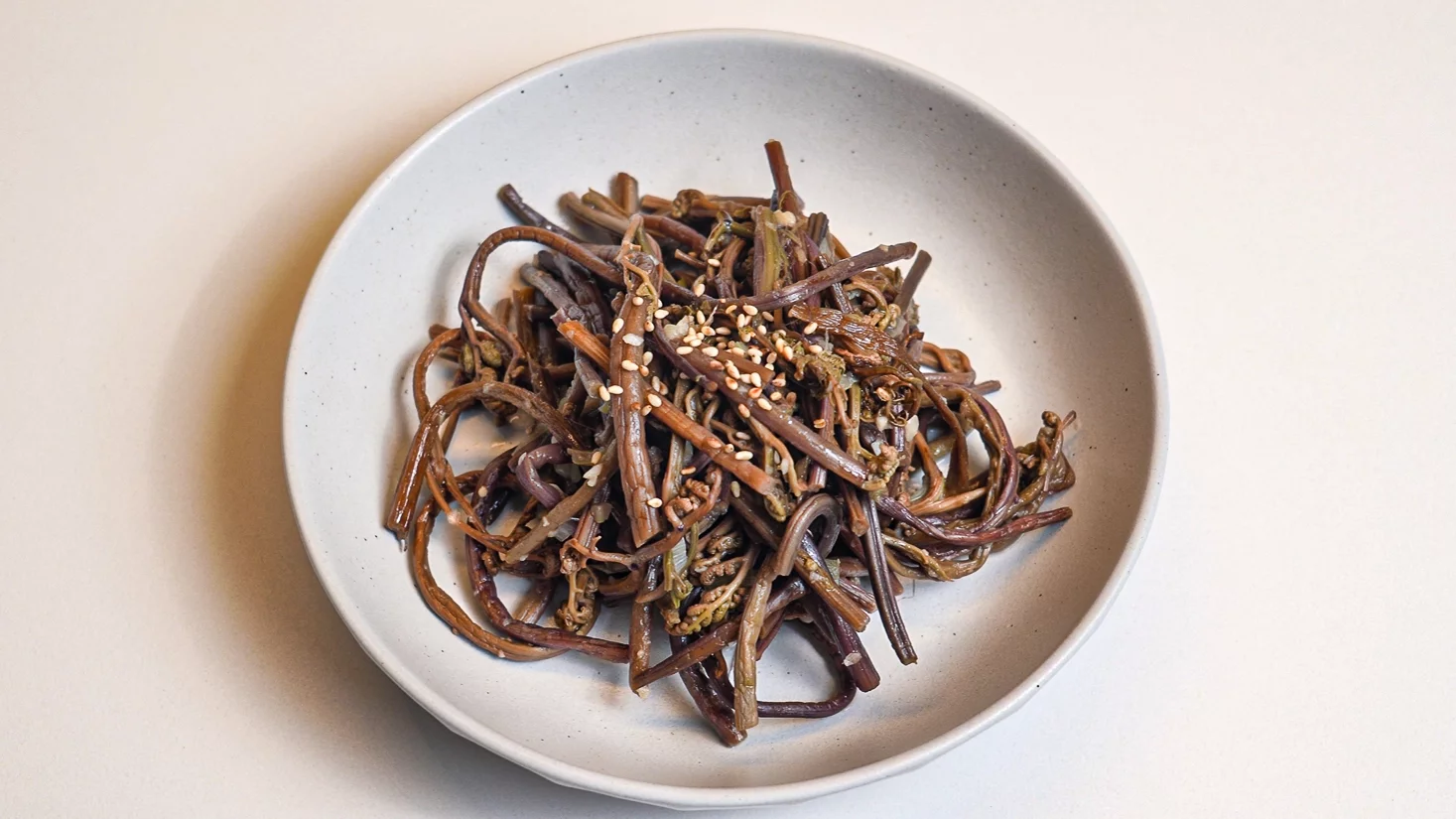
Gosari Namul (Seasoned Fernbrake)
If there’s one Korean side dish that quietly defines the depth of the country’s banchan tradition, it might just be gosari namul (고사리나물) — seasoned fernbrake that appears at everyday tables, holiday feasts, and the iconic mixed rice bowl bibimbap. Despite its understated appearance, this Korean seasoned vegetable side dish carries centuries of culinary heritage, a distinct earthy umami that no other banchan can replicate, and a remarkably satisfying chewiness that keeps reaching for it throughout the meal. Whether you’re new to Korean cooking or trying to round out your banchan repertoire, mastering gosari namul is one of the most rewarding investments you can make.
20 mineasy